
Organizations that purchase AI tools before analyzing their workflows often end up with expensive shelfware and frustrated teams. A workflow-first approach delivers better outcomes.
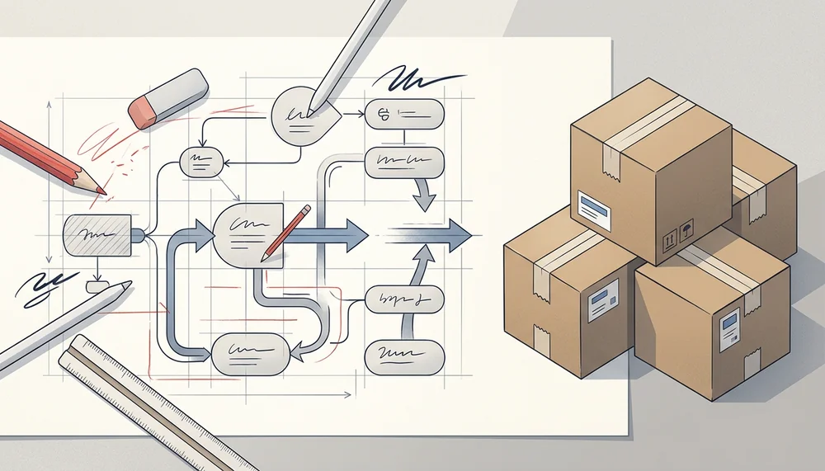
Workflow redesign should always precede technology selection in AI adoption programs.
Organizations should redesign workflows before purchasing AI platforms because tool-first adoption forces existing — often inefficient — processes onto new technology, producing friction, unused licenses, and shadow workarounds. The workflow-first approach maps current operations, identifies structural friction points, redesigns processes for AI augmentation, and only then selects tools that fit the redesigned workflow. This vendor-agnostic methodology ensures technology serves the process rather than dictating it.
The Tool-First Trap: When AI Platforms Meet Unexamined Workflows
Most enterprise AI adoption follows a familiar pattern. A vendor presents a compelling demonstration. Leadership approves procurement. The platform deploys. Six months later, adoption rates hover below 30 percent, teams have built parallel processes in spreadsheets, and the organization begins shopping for a replacement.
This cycle repeats because the starting point was wrong. The conversation began with a tool, not with a process. When AI platforms are purchased before workflows are examined, one of two outcomes typically emerges. Either the organization forces existing processes into the new software's constraints, preserving inefficiencies and adding integration complexity, or teams reject the tool and build shadow workflows outside approved systems.
The 2024 McKinsey Global Survey on AI found that while 65 percent of respondents reported their organizations regularly using generative AI — nearly double the proportion from the previous year — a significant subset continued to struggle with integrating these tools into operational workflows. The gap between tool availability and workflow integration remains the dominant barrier to value realization.
The symptoms of tool-first adoption are visible to anyone willing to look. Unused software licenses accumulate. Training programs fail because the tool does not match how people actually work. Multiple teams purchase different tools for the same function because no one analyzed the cross-functional workflow. The organization ends up with disconnected point solutions rather than integrated operational improvement.
The Workflow-First Approach: Process Before Procurement
The alternative begins with a simple principle: understand the work before selecting the technology. This approach treats AI as augmentation for redesigned processes rather than a replacement for human judgment applied to unchanged workflows.
The workflow-first methodology proceeds in sequence. First, map the current process in its actual form, not its documented form. Most organizations discover that documented workflows diverge significantly from actual practice. The gap between official process and real work contains the most valuable information for redesign.
Second, identify friction points where manual effort, redundant steps, approval bottlenecks, or information handoffs slow execution or introduce error. These friction points indicate where redesign will produce value, regardless of whether AI is involved.
Third, redesign the workflow to remove non-value-adding steps and restructure the process for augmentation. This redesign specifies what human judgment is required, what repetitive processing can be automated, and what decision points need enhanced information.
Only after these three steps does the organization evaluate specific tools. The evaluation criteria emerge from the redesigned workflow rather than from vendor capabilities. The organization knows what the process requires and can assess whether a given platform meets those requirements. This inversion separates successful adoption from expensive experimentation.
Why Vendor-Agnostic Analysis Changes Everything
Vendor neutrality in workflow analysis is not a philosophical preference. It is a practical necessity. When vendor representatives conduct discovery sessions, they understandably focus on their platform's capabilities. This shapes the conversation, often unconsciously, toward workflows that fit the tool rather than workflows that serve the business.
The risk is subtle but substantial. A vendor may demonstrate impressive natural language processing capabilities and suggest workflow applications. The customer, impressed by the demonstration, redesigns their process around what the tool can do. The result may be a solution searching for a problem, implemented at the expense of more valuable applications the vendor's platform cannot address.
Independent process analysis, conducted without reference to specific vendor capabilities, produces an unbiased assessment of what the workflow actually needs. This assessment may conclude that simple automation suffices, that better data integration is required rather than AI inference, or that the workflow should be eliminated entirely. These conclusions rarely emerge from vendor-led discovery.
A Fractional Chief AI Officer operating under vendor-agnostic principles can provide this independent assessment, ensuring that technology decisions flow from process requirements rather than sales demonstrations. This independence becomes particularly valuable when evaluating claims across multiple vendors.
The Workflow-First AI Adoption Framework: Five Steps
The following framework provides a structured approach to workflow redesign preceding technology selection. Each step includes specific actions teams can execute independently.
Implementation Notes
The Map phase requires direct observation rather than documentation review. Employees often develop workarounds that never appear in official process descriptions. These workarounds indicate where the formal workflow is broken and where redesign produces the most immediate value.
The Measure phase establishes quantitative baselines that protect the program from subjective assessment. Without baseline metrics, organizations cannot distinguish genuine improvement from enthusiasm bias. The metrics also provide an objective basis for vendor evaluation in the Select phase.
Workflow Redesign in Practice: Three Illustrations
The following examples describe generic but realistic scenarios where workflow redesign preceded technology selection. No specific client claims are made; these illustrations demonstrate the methodology in common operational contexts.
▶ Evidence
A mid-sized marketing team produces weekly content across multiple channels through a workflow involving draft, manager review, revision, legal review, and publishing. Average cycle time: eleven days.
Workflow analysis revealed that 40 percent of cycle time was spent waiting for review slots. Revision rates were high because writers lacked brief clarity. Legal review flagged the same issues repeatedly because previous feedback was not incorporated into templates.
Redesign focused on three changes: structured brief templates with embedded legal guidance, parallel review for standard content, and AI-assisted first drafts that writers refined rather than created from blank pages. Only after this redesign did the team evaluate content platforms against these requirements. Implementation reduced cycle time to four days.
▶ Evidence
A professional services research team compiled weekly market intelligence reports through manual database searches, shared documents, and individual synthesis. Researchers spent 60 percent of their time on information gathering and formatting, leaving limited capacity for analysis that consultants valued. Multiple researchers unknowingly covered overlapping sources.
The redesigned workflow introduced automated aggregation with AI-generated initial summaries, freeing researchers for cross-source synthesis and consultant-specific contextualization. The team evaluated research platforms against requirements for source coverage, summary quality, and knowledge management integration. Implementation reduced cycle time by 45 percent and increased analytical depth.
▶ Evidence
A manufacturing division's monthly reporting required analysts to extract data from seven systems, normalize formats in Excel, build charts in PowerPoint, and distribute via email. The process consumed three analyst-days monthly and contained frequent version control errors.
Workflow analysis showed that normalization and formatting consumed most time and introduced most errors. Variance explanations and trend commentary received minimal attention because analysts were occupied with data preparation.
Redesign consolidated data extraction through API connections, automated normalization, and generated standard report templates with populated charts. Analysts focused on analytical commentary for flagged variances. The team evaluated reporting platforms against requirements for connector breadth, transformation logic, and exception highlighting. Implementation reduced report production time by 70 percent and eliminated version errors.
When to Buy, Build, or Redesign: A Decision Framework
Not every operational challenge requires new technology. Workflow-first analysis frequently reveals that the appropriate response is process simplification rather than technology acquisition. Organizations should consider three paths based on their findings.
The critical discipline is to make this decision after workflow analysis, not before. Organizations that default to buying often acquire capabilities they do not need while overlooking simpler process improvements. Conversely, organizations that refuse to buy when analysis supports it may overinvest in custom development for problems standard platforms solve effectively.
Vendor-agnostic analysis provides the information basis for this decision. When conducted independently, the recommendation to redesign only, buy, or build flows from workflow requirements rather than vendor availability or internal preferences.
Key Insight: Why Workflow Redesign Prevents Tool Sprawl
▶ Key Insight
Workflow redesign before platform selection prevents tool-sprawl and adoption failures that characterize most enterprise AI programs. When organizations analyze processes independently of vendor influence, they identify whether their problem requires process simplification, targeted augmentation, or comprehensive automation. This clarity eliminates the speculative purchasing that produces unused licenses and competing point solutions. The workflow-first approach transforms AI adoption from a technology procurement exercise into an operational improvement program with measurable outcomes.
Frequently Asked Questions
Sources and References
- McKinsey & Company. "The State of AI in Early 2024." McKinsey Global Survey, May 2024. https://www.mckinsey.com/capabilities/quantumblack/our-insights/the-state-of-ai
- Davenport, Thomas H., and Ronanki, Rajeev. "Artificial Intelligence for the Real World." Harvard Business Review, January-February 2018. https://hbr.org/2018/01/artificial-intelligence-for-the-real-world
- MIT Sloan Management Review. "Expanding AI's Impact With Organizational Learning." MIT Sloan Management Review, 2023. https://sloanreview.mit.edu/projects/expanding-ais-impact/
- "Survey Analysis: Software Asset Management Tools Reduce SaaS Sprawl." Gartner Research, 2024. https://www.gartner.com
- "State of AI in the Enterprise, 5th Edition." Deloitte Insights, 2024. https://www2.deloitte.com/us/en/insights/focus/cognitive-technologies/state-of-ai-and-intelligent-automation-report.html
Discuss a vendor-agnostic AI adoption plan that starts with workflow redesign.
Ajánlott bejegyzések:

A bejegyzés trackback címe:
Kommentek:
A hozzászólások a vonatkozó jogszabályok értelmében felhasználói tartalomnak minősülnek, értük a szolgáltatás technikai üzemeltetője semmilyen felelősséget nem vállal, azokat nem ellenőrzi. Kifogás esetén forduljon a blog szerkesztőjéhez. Részletek a Felhasználási feltételekben és az adatvédelmi tájékoztatóban.

